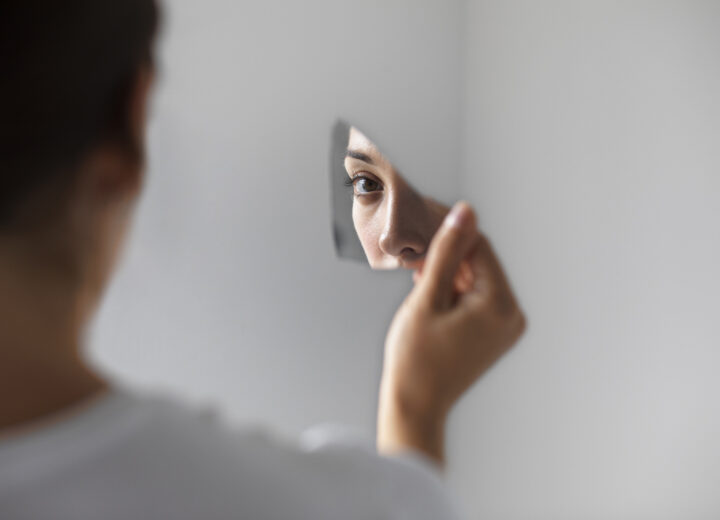


Most of us have faced that moment—standing before a mirror, eyes drawn to what we perceive as flaws. A stomach not flat enough, shoulders too narrow, a nose with the wrong shape. These silent conversations with our reflection reveal something profound about being human.
Body image is not simply what we see in mirrors. It is a complex psychological landscape where childhood memories, offhand comments from others, magazine covers, and our own emotional states collide to create something far more complicated than mere appearance. What we see when we look at ourselves is never just physical reality—it is a story we have learned to tell about ourselves.
The Neurological Foundations of Self-Perception
The way we experience our bodies begins not in mirrors but in our brain cells. Our minds construct what scientists call a “body schema”—a kind of internal map that tells us where our physical boundaries lie. This map does not simply record reality; it actively creates our sense of embodiment.
When someone loses a limb but still feels it itch or move, they are experiencing this remarkable brain function. Their mind continues to map a body part that no longer exists physically. Watch elite dancers move with extraordinary precision—their brains have developed unusually detailed and accurate body maps through years of movement.
Brain imaging shows us something truly remarkable: when people practice body awareness exercises regularly, the actual neural pathways involved in body perception change. Our internal body map is constantly being redrawn through experience. This is not abstract theory—it is visible in brain scans.
Psychological Theories: Mapping the Landscape of Self
Objectification Theory: When Bodies Become Objects
Listen to teenagers talk about their appearance, and you will hear something revealing. They often describe their bodies not as something they live in but as something others judge. “My thighs look huge in these jeans,” they might say—not “my thighs feel uncomfortable.” This subtle shift from experiencing to evaluating reveals objectification theory at work.
While this theory first emerged by studying women’s experiences, men increasingly describe similar pressures. Young men talk about needing six-pack abs and broad shoulders not for strength or health, but because they believe their value as men depends on these traits. Their bodies become projects rather than homes.
For people with multiple marginalized identities, these pressures multiply. Black women face beauty standards that often devalue their natural hair textures while simultaneously imposing contradictory expectations about body shape. Their lived experiences remind us that body image exists within larger systems of power and representation.
The spread of Western beauty ideals globally has created strange new tensions. People who never questioned their appearance within their own cultural context suddenly find themselves falling short when measured against imported standards. Local traditions that once valued diverse body types now compete with narrower American ideals spread through movies, social media, and advertising.
Social Comparison Theory: The Digital Age Amplification
Social media has changed how we see ourselves in ways nobody could have predicted twenty years ago. What was once occasional comparison—seeing a billboard or magazine cover—has become a constant flood of images and implied judgment.
Spend time with any group of teenagers as they scroll through Instagram, and you will witness a familiar pattern. What begins as checking messages turns into an endless scroll through carefully staged photos of seemingly perfect lives and bodies. An hour later, many feel worse about themselves than when they started.
The algorithms make this especially toxic. After someone looks at just one fitness model’s page, their feed suddenly fills with more idealized bodies. This is not coincidental—platforms maximize engagement through emotional triggers, and insecurity drives attention. The technology is designed to keep us scrolling, not to protect our mental health.
The impact hits adolescents particularly hard. Middle school teachers describe seeing students increasingly anxious about their appearance, many tracing these feelings directly to social media use. Young people form their identities in an environment unlike anything previous generations experienced—constant comparison, constant evaluation, constant pressure.
Self-Discrepancy Theory: Navigating the Gap Between Real and Ideal
In therapy groups, when people draw how they actually look versus how they wish they looked, the differences are often heartbreaking. A successful, healthy adult might draw their actual self with exaggerated flaws, while their ideal self looks impossibly perfect—a standard no human could achieve without digital manipulation.
This gap between real and ideal drives enormous suffering. The wider the perceived gulf between how we look and how we think we should look, the more distress we feel. And as digitally altered images become our reference points, that gap keeps widening for many people.
The Biochemical Undercurrents of Body Image
We rarely talk about how hormones color our self-perception. When stress hormones like cortisol flood our system during high-pressure periods, they change how we see ourselves. Ever noticed feeling suddenly “fat” or “ugly” during finals week or before a big presentation? That is not imagination—it is biochemistry affecting perception.
Puberty hits like a perfect storm for body image. Bodies change dramatically while hormones simultaneously influence how teens feel about those changes. Adolescents must adjust to new physical realities while riding waves of emotion that make stable self-perception nearly impossible.
The relationship works both ways: feeling bad about your body triggers stress hormones, which can further distort how you see yourself, creating a vicious cycle. Breaking this pattern often requires addressing both mental patterns and physical stress responses.
Beyond Critique: Constructive Approaches to Body Perception
Body neutrality offers a refreshing alternative to both hatred and forced positivity. When people first hear they do not have to either love or hate their bodies—that they can simply acknowledge their bodies without strong feeling—many experience profound relief. “You mean I can stop this exhausting fight with my mirror?” they ask.
People with the healthiest body image are rarely those with “perfect” bodies or even those with constant body positivity. They are people who have built their self-worth on multiple foundations. Their bodies matter, yes, but so do their relationships, work, values, creativity, and contributions to their communities.
Acceptance and commitment therapy has shown particular promise in clinical settings. Rather than fighting negative thoughts, this approach helps people notice body-critical thoughts without being controlled by them. Many describe it as finally putting down a heavy weight they had carried for years.
Practical Transformation: Navigating the Journey
Changing your relationship with your body is not about achieving some perfect form but developing a more compassionate perspective.
When teenagers analyze before-and-after photos showing digital manipulation, many express shock. “That is not even the same person,” they often say, suddenly seeing how extensively media images are altered. Learning to decode these messages provides some protection against impossible standards.
Parents and teachers shape body image more than they realize. Adults who casually comment, “Should you really eat that?” or “You have put on weight” may trigger years of body anxiety. Conversely, adults who model comfortable relationships with food and their own bodies create powerful counter-narratives.
Community-level changes show particular promise. Schools that shift health education toward celebrating what bodies can do rather than how they look report significant improvements in students’ body acceptance. Systemic changes can support individual healing.
Conclusion: Redefining Personal Narrative
Body image is not something you fix once and forget. It is a relationship that evolves throughout life. The goal is not perfection—either of your body or your feelings about it. The goal is to stop letting appearance dictate how fully you live.
Your worth exists beyond any reflection. It lives in the connections you forge, the growth you experience, the values you embody, and the unique humanity you bring to the world. Your body is not an ornament to be judged but the instrument through which you experience everything that matters. Give it care and respect, but refuse to let it define your value.
Sources:
- Media Exposure and Body Image in Adolescents (https://www.mdpi.com/2227-9067/10/7/1263)
- Social Media Use Can Be Harmful to Body Image, Especially for Girls (https://www.apa.org/news/press/releases/2023/02/social-media-body-image)
- Social Media and Body Image: What You Need to Know (https://www.healthline.com/health/social-media-and-body-image#support)
- How the Media Affects Body Image (https://psychcentral.com/health/how-the-media-affects-body-image)
- Body Image and Men: Pressure to Be Muscular (https://www.betterhealth.vic.gov.au/health/healthyliving/body-image-men)
- The Role of Social Media in Shaping Body Image and Mental Health (https://pmc.ncbi.nlm.nih.gov/articles/PMC11276240/#sec2-healthcare-12-01396)
- How Body Image Affects Mental Health: What the Research Says (https://www.medicalnewstoday.com/articles/249190#summary)
- Beauty Standards and Mental Health: Understanding the Impact (https://www.medicalnewstoday.com/articles/beauty-standards-and-mental-health#beauty-standard-exposure)